Dog Bladder Stones
Bladder stones in dogs (known as urinary calculi) are mineral deposits that usually begin to form because of bacteria in the dog's urine. They can be large or consist of many smaller pieces.
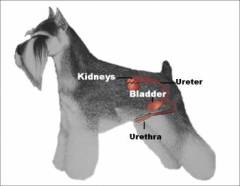
Mini Schnauzer Urinary Tract
Bladder, Kidneys, Ureter, Urethra
The 2 most common warning signs of bladder stones formation are straining to urinate and blood in the urine.
If your Miniature Schnauzer displays either of these warning signs
during elimination or any other abnormal urination symptoms that put you
on alert, seek medical attention from your veterinarian right away. Dog Bladder stones
are very painful and could be life-threatening, if left untreated. So
seek medical help immediately. Your dog's life could depend on it.
Warning Signs of Dog Bladder Stones
Since your Miniature Schnauzer cannot talk to you, you must be aware of your dog's habits and moods. Don't ignore any signs that are "out of the ordinary for your dog". If something seems a little off, call your veterinarian and describe your Schnauzer's symptoms for advice on what to do.
Warning Signs of Dog Bladder Stones
- Frequent Urination: If your Schnauzer develops a need to be let out more often, this could indicate some type of internal problem or urinary tract infection. Observe and journal your dog's behavior and then call your vet for consult.
- Strains While Urinating: Watch your Schnauzer during elimination to see if he appears to be straining. Straining is caused from small stones trying to pass out of the bladder through the urethra. This is very painful to your dog. If obstruction occurs, the bladder will not be able to empty which poses a life-threatening condition.
- Blood in Urine: Look for traces of blood in your Miniature Schnauzer's urine. If there is no blood, check the color. Is the urine dark in color or cloudy? Is there a foul smell or odor?
- Loss of Energy: Is your Miniature Schnauzer feeling weak and less active than usual? Has your dog's eating and/or drinking patterns altered drastically?
Diagnosis, Treatment, & Prevention of Stones
Diagnosis: Your veterinarian will examine your dog and perform a series of tests
including a urinalysis, x-ray and ultrasound. The urinalysis will check
for the mineral content of the urine and may contain some remnants of
stones. The urine will also be tested for bacteria content. An x-ray or
ultrasound will provide the veterinarian with a more precise vision of
the stones. Once a proper diagnosis has been determined, treatment can
begin.
Treatment: Treatment will be determined based on the type of stones and problems they are causing. Treatments include:
Surgical removal which is the fastest way to resolve the problem and
needed when stones are large; Special diet which must be strictly
adhered to for the stones to dissolve; Catheterization which is used to
remove and flush out urine and stones: Anitbiotics and other medications
designed to dissolve stones may be used if the stones are relatively
small.
- Always have fresh clean water available for your Miniature Schnauzer (filtered or spring water is best). By drinking plenty of water your Miniature Schnauzer will flush out excess minerals before formation begins. Use distilled water for one full week of every month as a means of detoxification.
- Apple Cider Vinegar is also a powerful detoxifying agent that helps normalize acid levels in the stomach and improves the health and function of vital organs. So add a few drops to your Miniature Schnauzer's drinking water.
- Exercise your Miniature Schnauzer daily. Frequent walks will provide yet another outlet for your Schnauzer to eliminate more often and therefore flush out bacteria and excess minerals from the bladder.
- Wet vs Dry dog food. If your Miniature Schnauzer is not drinking enough water, consider switching to canned dog food which normally contain 70% water. Or be sure to add water to your dog's meal.
- Check pH Levels: These pH strips are ideal for testing your Schnauzer's urine at home. Ask your vet about what your Schnauzer's target level should be and then monitor it. Also ask your veterinarian about supplementing care with use of holistic herbs.
Round after round of antibiotics is not
the best long-term solution to preventing recurrent urinary tract
problems. The key to urinary tract health, for many pets, can be found
by using the right health supportive products.
Only Natural Pet Cranberry Wellness Powder
contains a unique set of ingredients that work together to support a
healthy urinary tract in cats and dogs. Pets prone to recurrent
pathogenic urinary tract or bladder problems or struvite crystals in the
urine have benefited from the addition of these key substances to their
diet.
Formula Benefits:
- helps lower urine pH (normalize pH when urine is too alkaline).
- helps dissolve particulate matter in the urine.
- helps reduce the formation of struvite crystals and stones.
- helps prevent bacterial attachment to the lining of the urinary tract.
- soothes irritated tissues in the urinary system.
- helps reduce the recurrence of pathogenic urinary tract and bladder problems.
- supports the immune system in resisting disease.
About Kidney Stones and Bladder Stones in Dogs
Urolithiasis is the condition where stones form in the urinary system (kidney stones and bladder stones). The most common types of urinary stones in dogs are the struvite and calcium oxalate.
Struvite stones are comprised of magnesium, ammonium and
phosphate and account for more than one-third of all stones found in the
urinary tracts of dogs. They are almost always accompanied by bacteria
that create a high alkaline pH. Avoiding alkaline foods may help
prevent such stones from forming. A more acidic diet would include foods
like chicken, beef, eggs, fish, yogurt, cottage cheese, brown rice and
beans.
Calcium oxalate stones are primarily caused by high levels of
calcium in the urine. The most common sign or symptom is trouble
urinating. In order to prevent such stones from forming adjustments
should be made in your dog's diet to maintain normal calcium levels.
Search Schnauzers-Rule.com

Go from Dog Bladder Stones to About the Miniature Schnauzer on Schnauzers Rule
Go from Dog Bladder Stones to Miniature Schnauzer Health
Related Topics:
★ Dog kidney Stones
★ First Aid for Dogs
★ Schnauzer Health Articles
Search Schnauzers-Rule.com



DON'T FORGET....
Mother's Day May 12, 2024

Check out these great Dog Mom Gifts on AMAZON
GET HEALTHY

Great deals on vitamins for your pet!
Note: I earn a small commission from qualifying purchases.
Veterinary Strength Shampoo for Dogs
helps destroy bacteria and fungi that cause skin infections
and Schnauzer Bumps
Mini Schnauzer Family Sun Shade for your car's windshield. So dang cute

Adorable Schnauzer Kitchen Quick Drying Dish Towel

Schnauzers Rule on Zazzle

Schnauzers Rule Zazzle Shop
Be sure to visit our Zazzle store. We have lots gifts for Miniature Schnauzer Lovers including T Shirts, Stickers, Home Decor items and more. Got Schnauzer?
Schnauzer Health Care
DOG HEALTH SERIES
•Diabetes
• Pancreatitis
•Kidney Stones
•Schnauzer Bumps
•Schnauzer Checkup Chart
•Dog Pain Symptoms
• Dog Allergies
•First Aid for Dogs
•CPR for Dogs
•Heimlich Maneuver for Dogs
•Pet Insurance
•Veterinarian
Special Promotional Offers

Check out all the cute dog customers on AMAZON
Amazon purchases through affiliate links, earn me a small commission