Heartworm Disease in Dogs
Heartworm disease (Dirofilaria immitis) is a serious and potentially fatal condition to a dog's heart and lungs. These vital organs become invaded by worms. But how does this happen?
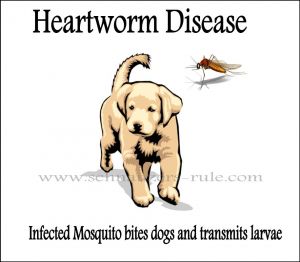
The process starts when a dog is bitten by an infected mosquito. Mosquitoes carrying the infective heartworm larvae (microfilaiae) transmit it to the dog. The transmitted larvae begin to develop and then migrate in the dog's body over a period of several months.
Once the infective larvae mature into adult worms (which takes about 6 months), they begin producing offspring microfilaria into the blood stream, which reside in the heart, lungs and associated blood vessels of the dog.
And once they are there they continue their devastating life cycle process of invading the dog’s arteries and causing the dog extensive injury.
Signs of Heartworm Disease
At the onset, dogs infected with heartworms show no signs of the disease. After the infection begins to worsen however, dogs slowly begin to show some signs including a decrease in appetite, lack of energy, and some develop a cough. If the infection is left untreated a dog could die of a sudden heart failure.

Veterinarians can perform several different tests on a dog to identify whether or not it is infected with the disease. Blood tests usually detect the infection, however a vet may want to do an ultrasound and have x-rays of the heart and lungs as well. Keep in mind, that even if a dog is not showing visible signs of the disease, if infected, damage is still occurring in the blood vessels, heart, and lungs.
Most dogs infected with heartworms can be successfully treated. Successful treatment depends on early diagnosis (before heartworm symptoms are obvious) and the ability to kill all of the adult worms in the heart and arteries of the lungs. Heartworm treatment is not without its own threats to the dog, however. Drug complications and complications arising from the actual worms dying inside the dog's vital organs. The more severe the case, the greater the possibility of complications and mortality. Early diagnosis and treatment is therefore crucial for success.
Preventing Heartworm Disease
While there is treatment for heartworm disease, the very best medical treatment is prevention. All you have to do is make sure your pet is on a monthly preventative medicine. But before starting a preventive program, all dogs (especially those that could be possibly infective) should first be tested for heartworms by their veterinarian. The monthly treatments are preventative treatments they do not cure an infected dog.
Besides using monthly preventives, you can help minimize infections by reducing your dog's exposure to mosquitoes. There are many pet-friendly products like Neem Protect Spray which uses a natural tree oil to repel lice, mites, flies, mosquitoes, fleas, gnats, and ticks. Neem contains NO synthetic pesticides or chemicals.
It's even safe and effective for human use, too. Have you ever met someone that is a mosquito magnet? That's me. So I spray Neem on my Schnauzer and myself before we head out on our summer walks. I feel good knowing I'm providing my Schnauzer with even more protection from being infected and bitten by insects.
Heartworm Prevention Tips:
- Don't leave your Schnauzer outside during the hours mosquito activity is at the highest (dawn and dusk hours).
-
Make sure there is no standing water in your yard. Mosquitoes need
stagnant water to reproduce. Empty water pails, and change the water in
kiddie pools, bird baths and the like, every 4 to 5 days.
- Reduce lights at night since bugs are attracted to the light.
- Use outdoor repellents, citronella candles and bug zappers.
Although some areas are at higher risk than others, heartworm infection has been found in dogs throughout all of the United States.
Click here to check the prevalence in your area
Dogs of any age, breed, sex, or living environment are susceptible to heartworm infection. Even if you have a so-called "indoor dog", he is susceptible to infections. Mosquitoes can very easily get into your home via doors opening and closing, or an open window with a loose screen, or a screen door with a small tear. So play it safe...
Ask your veterinarian about heartworm preventative treatment for your Miniature Schnauzer. Don't wait. Do it today!
Canine Heartworm Disease is Totally Preventable!
There are plenty of economical monthly heartworm preventative treatment options available (both oral treatments and topical treatments) such as Heartgard and Interceptor. These medications help to prevent the microfilariae (larvae) from developing into adult heartworms, thus preventing your Schnauzer from heartworm disease.
note: Although you can buy heartworm preventatives online, Veterinarian approval is usually required via a verification of a prescription.

Remember it is your responsibility to care for your Miniature Schnauzer and to keep him/her as healthy as possible. Get your Schnauzer on monthly preventative treatment for heartworms. Don't let this fatal disease destroy your pet. Consult your Vet today!
Fast Facts
- Heartworm disease has been reported in all 50 states.
- Infected mosquitoes transmit the disease to dogs.
- No visible signs of disease are present until infection worsens.
- Vets perform tests to determine if a dog is heartworm positive.
- Infected dogs must endure risky treatments and hospitalization.
- Prevention is the best treatment.
- Heartworm tests should be performed annually.
Take a few moments to watch this informative video on the life cycle of heartworms and how the disease is transmitted to our canine companions.
Search Schnauzers-Rule.com

KNOWLEDGE SHARE ... If you found this information on Heartworm Disease in Dogs helpful please share it with your dog-loving friends by clicking on one of the share links at the top right or bottom of this page. It could save a dog's life!
Go from Heartworm Disease to About the Miniature Schnauzer on Schnauzers Rule
Go from Heartworm Disease to Dog Articles
Related Topics:
★ Ivermectin for Dogs, Ivomec toxicity
★ Summer Safety for Dogs
★ Miniature Schnauzer Health
Search Schnauzers-Rule.com



DON'T FORGET....
Mother's Day May 12, 2024

Check out these great Dog Mom Gifts on AMAZON
GET HEALTHY

Great deals on vitamins for your pet!
Note: I earn a small commission from qualifying purchases.
Veterinary Strength Shampoo for Dogs
helps destroy bacteria and fungi that cause skin infections
and Schnauzer Bumps
Mini Schnauzer Family Sun Shade for your car's windshield. So dang cute

Adorable Schnauzer Kitchen Quick Drying Dish Towel

Schnauzer Health Care
DOG HEALTH SERIES
•Diabetes
• Pancreatitis
•Kidney Stones
•Schnauzer Bumps
•Schnauzer Checkup Chart
•Dog Pain Symptoms
• Dog Allergies
•First Aid for Dogs
•CPR for Dogs
•Heimlich Maneuver for Dogs
•Pet Insurance
•Veterinarian
Schnauzers Rule on Zazzle
Schnauzers Rule Zazzle Shop
Be sure to visit our Zazzle store. We have lots gifts for Miniature Schnauzer Lovers including T Shirts, Stickers, Home Decor items and more. Got Schnauzer?
Special Promotional Offers

Check out all the cute dog customers on AMAZON
Amazon purchases through affiliate links, earn me a small commission